
Repair or Replace Euro Pallets — When Does Each Make Sense?
EPAL repair guidelines, cost comparison and decision guide: When to repair a euro pallet and when to replace it.
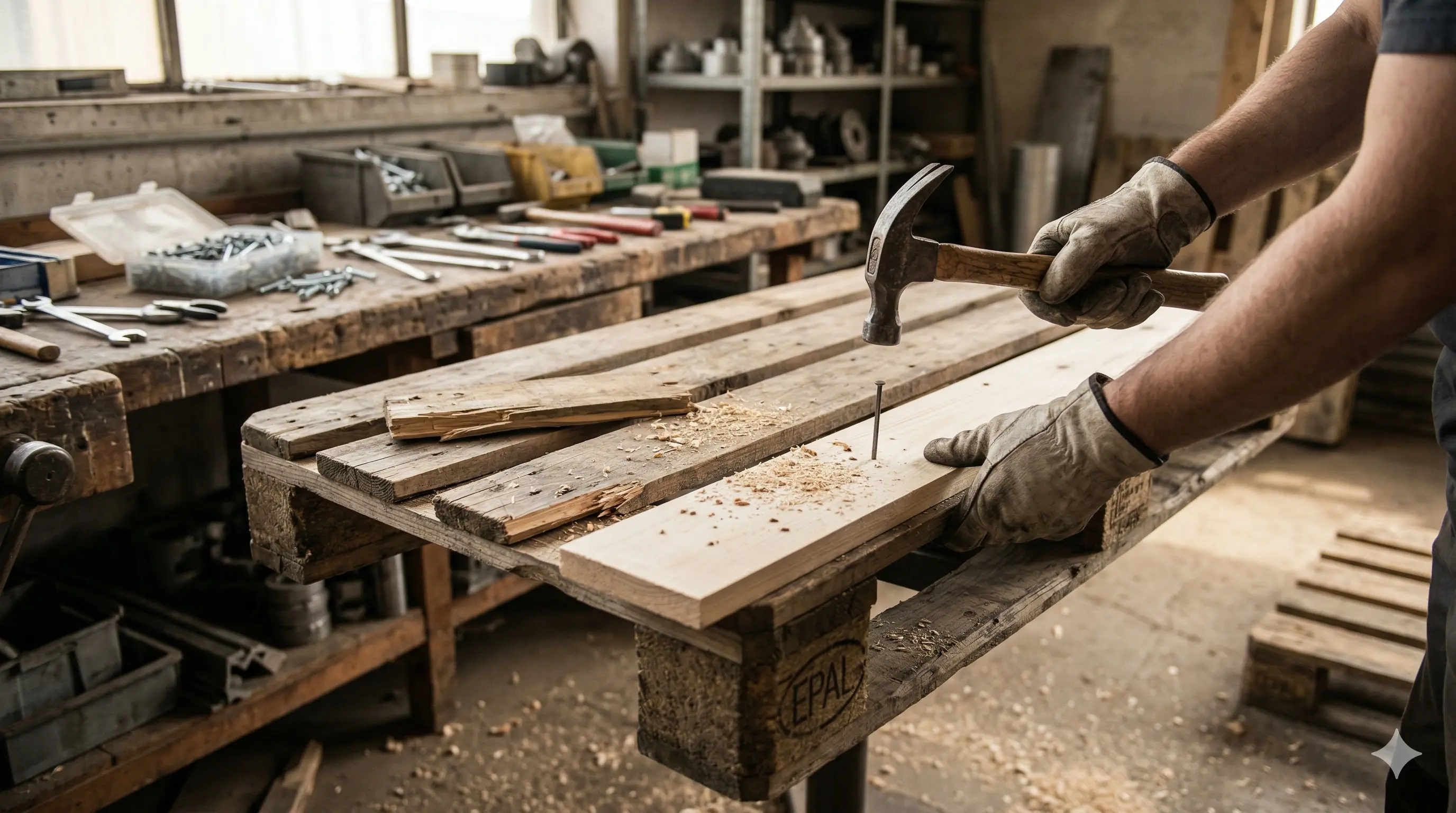
A Euro pallet lasts six to eight years on average — provided it is properly maintained and repaired in time. But not every damaged pallet can be economically restored. The decision between repair and replacement is one of the most common operational questions in pallet logistics, and it directly affects costs, efficiency and sustainability.
This article gives you the fundamentals for making this decision on solid ground: from the official EPAL repair guidelines through a concrete cost comparison to clear criteria for when repair makes sense and when you are better off replacing.
EPAL repair guidelines: What may be repaired?
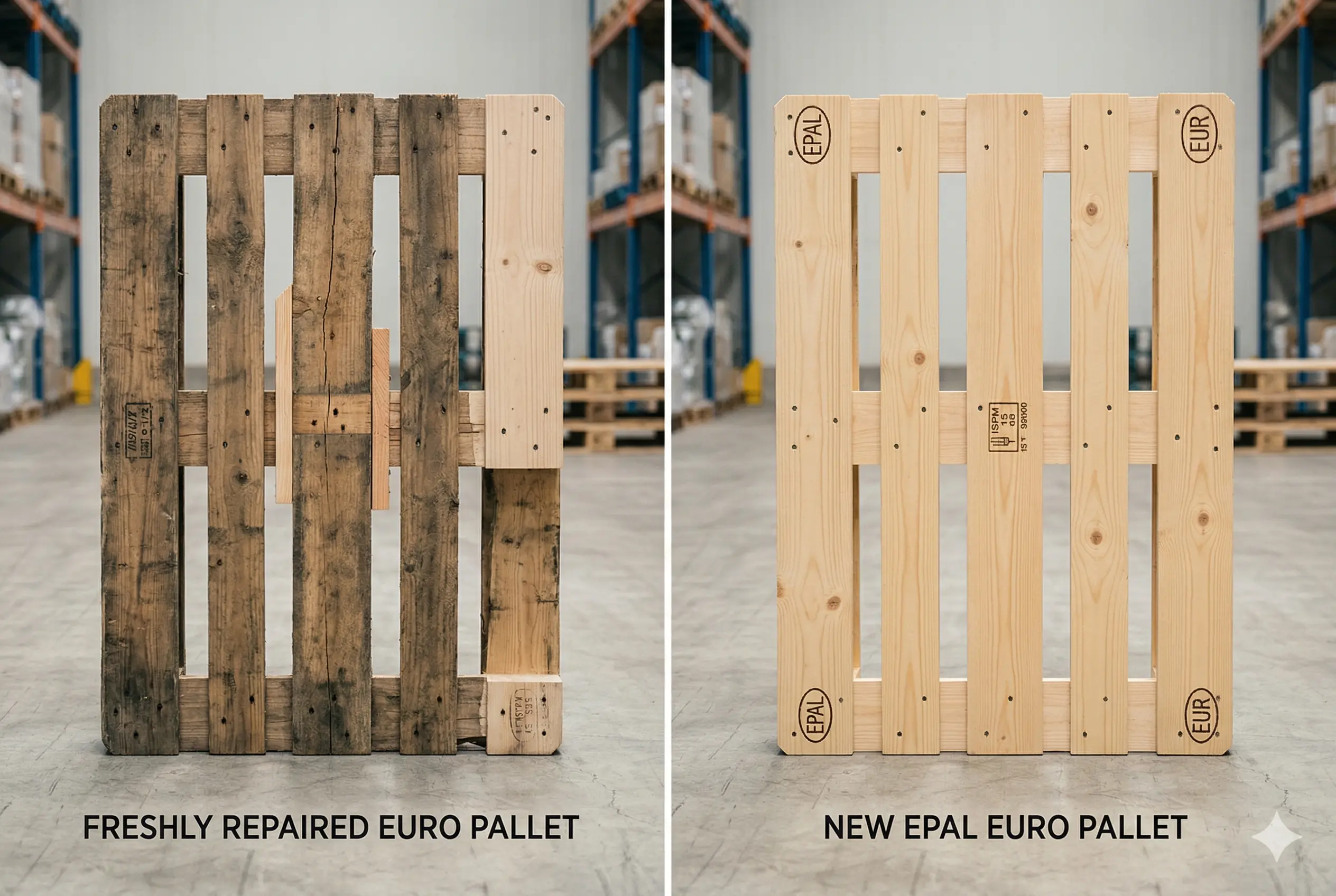
The European Pallet Association (EPAL) has defined clear guidelines on which damages to a Euro pallet may be repaired and which may not. Only licensed EPAL repair companies may carry out repairs after which the pallet re-enters circulation as an exchange-grade EPAL pallet.
Repairable damage:
- Individual broken or missing top and bottom boards may be replaced with new boards that meet EPAL specifications (dimensions, wood type, nailing).
- Loose or slightly damaged blocks may be re-fastened or replaced.
- Protruding nails may be driven in or replaced with new nails.
- Chipped board corners are repairable as long as residual load-bearing capacity is maintained.
Non-repairable damage:
- More than two broken top boards or more than one broken bottom board.
- Broken or missing centre blocks that compromise structural integrity.
- Severe wood rot that fundamentally impairs load-bearing capacity.
- Missing or illegible EPAL brand marks that cannot be replaced through re-licensing.
- Contaminated wood (chemicals, oil, food residues) posing a health risk.
Repaired pallets must be marked with a special repair nail identifying the repair company and date. This marking is essential for traceability within the pallet pool.
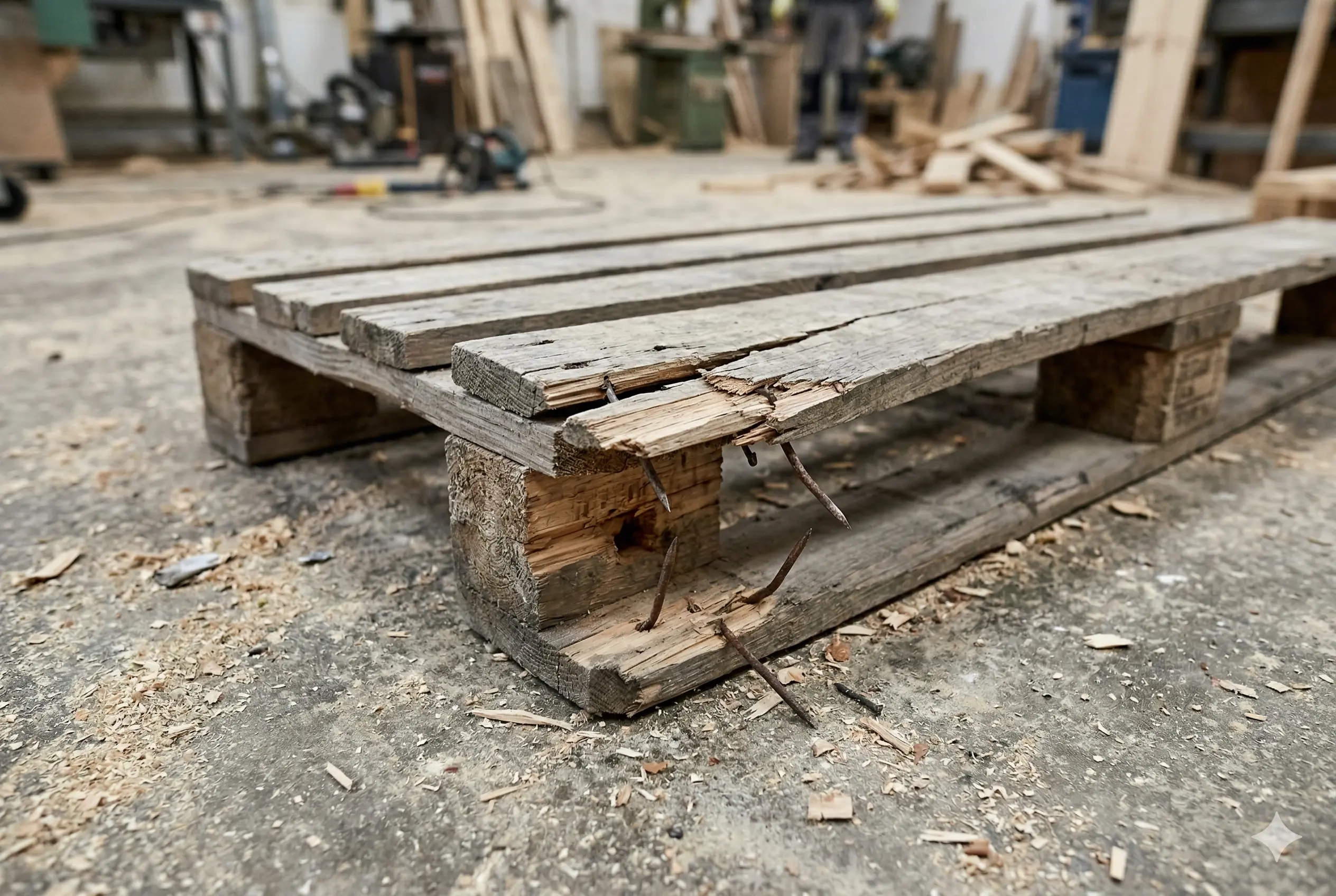
Cost comparison: Repair vs. new purchase vs. second-hand
Costs vary by region, supplier and market conditions, but the following benchmarks provide solid orientation:
| Option | Cost (approx.) | Lead time |
|---|---|---|
| Repair (minor damage) | €2–4 per pallet | 1–2 days (external provider) |
| Repair (moderate damage) | €4–7 per pallet | 2–5 days |
| Used pallet (Class A) | €8–11 per pallet | Immediately available |
| New Euro pallet | €12–18 per pallet | 1–3 weeks delivery |
Repair is almost always financially worthwhile for minor damage — the cost saving compared to buying new is 70–85%. For moderate damage the advantage narrows, and the decision depends on additional factors.
When repair makes sense
Repair is the better choice when several of the following conditions are met:
Minor to moderate damage: Individual broken boards, loose nails or chipped corners — damage that is repairable under EPAL guidelines and does not affect the pallet's basic structure.
Large pallet inventory: Companies with large pallet fleets (from 1,000 units) benefit particularly from a systematic repair programme. Cost per pallet decreases with volume, and the existing stock is used more efficiently.
Sustainability goals: Each repaired pallet saves approximately 20 kg of CO₂ compared to new production. For companies with ESG reporting, this is a relevant factor.
Availability of a repair provider: When a licensed EPAL repair company is nearby, transport costs and turnaround times drop significantly.
The quality classes play an important role here: a Class B pallet can often be restored to Class A level through repair — a substantial increase in value at low cost.
When replacement is the better option
In certain situations, replacement — swapping for a new or used pallet — is the smarter decision both economically and operationally:
Severe structural damage: When multiple load-bearing elements are affected simultaneously, repair costs quickly exceed the pallet's value. A second-hand purchase or new replacement is cheaper.
Time pressure: Repairs take time — for transport to the repair facility, the repair itself and return delivery. When pallets are needed at short notice, immediate replacement is the only option.
Contamination: Pallets contaminated with chemicals, oil or other substances may not be repaired under EPAL guidelines. Disposal and replacement is the only route.
Missing EPAL certification: Non-EPAL pallets or pallets with illegible brand marks cannot be officially repaired and returned as exchange-grade. Replacing with a certified pallet is the more practical solution.
Automated warehouses: High-bay and automated systems impose stricter dimensional requirements. Even slightly warped pallets can cause disruptions, making replacement with dimensionally accurate pallets often unavoidable.
The role of damage documentation in the decision
A well-founded decision between repair and replacement requires that the damage is correctly recorded and assessed. This is exactly where many companies fail: without systematic damage documentation, the data foundation for the right decision is missing.
What should be documented:
- Type and extent of damage (which components, what damage type)
- Photographic capture with timestamp
- Quality class assignment before and after the damage
- Estimated repair cost vs. replacement cost
Modern AI-based image analysis can accelerate this process considerably: instead of an employee manually assessing each defect, an AI automatically identifies the damage type, affected component and severity from photos — and provides a recommendation on whether repair or replacement is more cost-effective.
Companies that systematically record pallet damage spot patterns: Which suppliers frequently deliver damaged pallets? Which damage types occur most often? Where does an investment in prevention pay off? This data is the key to long-term optimisation of pallet logistics.
Conclusion: Repair and replacement as a strategic decision
The question "Repair or replace?" cannot be answered with a blanket rule. It depends on the type of damage, available resources, time pressure and the individual requirements of the business.
As a rule of thumb: Repair minor damage, replace severe damage, and decide everything in between on the basis of solid damage documentation. Those who digitise and data-drive this process not only save money but extend the lifespan of their pallet fleet — and contribute to the circular economy.

Ready for digital pallet returns?
Try the app now for free and be among the first to use Pallet Terminal.
No credit card required